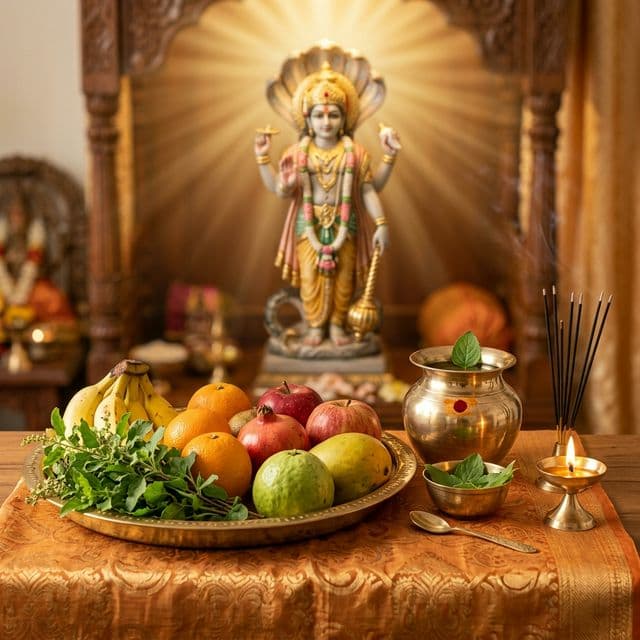
Ekadashi (एकादशी) is considered one of the most important and sacred fasting days in Hinduism. Falling on the 11th day of each lunar fortnight, Ekadashi occurs twice every month — once during the waxing moon (Shukla Paksha) and once during the waning moon (Krishna Paksha).
Lord Vishnu declares in the Padma Purana that among all fasts and penances, the Ekadashi Vrat is the most dear to Him.
What is the Correct Way to Observe Ekadashi?
The Night Before (Dashami):
- Eat a light sattvic dinner before sunset
- Avoid onion, garlic, and non-vegetarian food
- Set a spiritual intention (sankalp) for the fast
On Ekadashi Day:
- Wake up before sunrise (Brahma Muhurat is ideal)
- Take a bath and offer prayers to Lord Vishnu
- Strict observers abstain from all food and water (Nirjala)
- Partial observers may consume fruits, milk, and sabudana
- Spend the day in devotion — read Vishnu Sahasranama, Bhagavad Gita, or chant "Om Namo Bhagavate Vasudevaya"
Breaking the Fast (Dwadashi Parana):
- The fast must be broken on the next morning (Dwadashi) within a specific time window
- Begin by drinking water, then eat light food
Foods Allowed During Ekadashi
- Allowed: Fruits, milk, curd, potato, sweet potato, sabudana (sago), dry fruits, rock salt (sendha namak), buckwheat (kuttu), water chestnut flour (singhara atta)
- Strictly Avoided: Rice, wheat, lentils, regular salt, grains of any kind, onion, garlic
Spiritual Benefits
- Purification of Karma: Fasting purifies past karmic debts and prepares the soul for moksha
- Detoxification: The body gets a natural bi-monthly detox, improving metabolism and immunity
- Mental Discipline: Regular fasting strengthens willpower and self-control
- Divine Grace: Lord Vishnu's special blessings protect the devotee from all sorrows
Most Significant Ekadashi Days
- Nirjala Ekadashi (Jyeshtha month) — The most powerful Ekadashi; fasting without water
- Devuthani Ekadashi — The day Lord Vishnu wakes from cosmic sleep
- Papankusha Ekadashi — Destroys even the most severe sins